Release Time:2026-08-31 Views:300
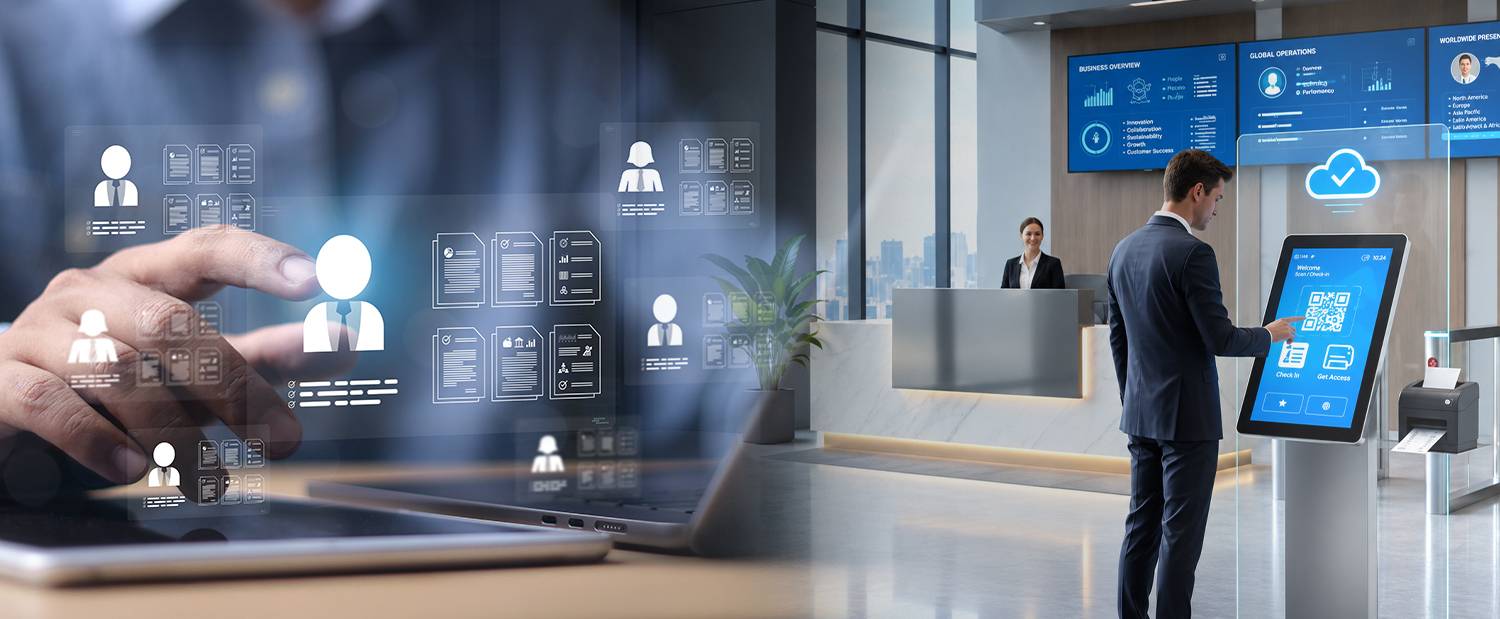
Visitor management has evolved significantly from the traditional process of recording names in a register and issuing temporary visitor passes. Today, organisations and residential communities are looking for solutions that can deliver secure access while making the visitor journey faster, more convenient and more seamless.
As facilities become increasingly connected, visitor management is becoming an integral part of the broader security ecosystem. Technologies such as facial recognition, QR-based credentials, mobile applications, cloud platforms and integrated security systems are helping organisations transform how visitors are identified, authorised and monitored.
For modern facilities, the objective is no longer simply to know who has entered the premises. It is about creating a secure, intelligent and frictionless visitor experience from entry to exit.
A modern visitor management system should balance two priorities: robust security and a convenient user experience.
ZKTeco’s Visitor Management Solution enables organisations to simplify visitor registration while maintaining control over where and when visitors can access the facility. Visitors can complete a one-time registration and receive access authorisation for the entire facility or only designated areas, depending on predefined permissions.
For walk-in visitors, registration can be completed through a self-service kiosk or by taking a selfie using a smartphone. Once the visitor is approved by an administrator through the ZKBio CVSecurity software platform, facial recognition can be used for authentication and access.
For scheduled visits, the process becomes even more streamlined. Administrators can pre-authorise visitors and send a QR code directly to their email address through ZKBio CVSecurity. Upon arrival, visitors simply present the QR code at the designated access control device for authentication.
The process continues beyond entry. Visitors can check out after completing their visit, creating a complete and traceable visitor journey while reducing manual intervention for security personnel and reception teams.
This combination of pre-registration, biometric authentication and digital credentials helps organisations create a visitor experience that is both secure and convenient.
The increasing adoption of biometrics and digital passes is reshaping visitor authentication. Facial recognition enables rapid identity verification without requiring visitors to carry physical cards or remember access credentials. By linking a visitor’s identity with their authorised access permissions, biometric authentication can help reduce the risks associated with credential sharing and impersonation.
Whereas digital passes like QR codes can be delivered directly to a visitor’s smartphone, allowing them to use their mobile device as a gateway to the facility.
Together, biometrics and digital passes support a more contactless and efficient access experience. They also help reduce the administrative workload associated with manually registering visitors, issuing temporary credentials and verifying identities at reception. However, the transformation is not limited to commercial facilities.
One of the biggest developments in modern security infrastructure is the move towards integrated systems.
Visitor management should not operate as an isolated platform. It becomes significantly more valuable when visitor information can interact with other security technologies across a facility.
Through ZKBio CVSecurity’s Multi-Module Linkage capabilities, ZKTeco’s Visitor Management Solution can integrate with systems such as:
• Access control
• Entrance control
• Video surveillance
• Elevator control
• Other security systems
Once a visitor has been verified, predefined policies can determine the access permissions assigned to that individual. Visitor records can also be synchronised with connected security systems, providing security teams with greater visibility into visitor movement.
This integrated approach can help organisations move from fragmented security operations towards a more unified security ecosystem.
For example, when visitor records, access events and surveillance information are connected, security teams can gain greater situational awareness and investigate incidents more efficiently. Instead of looking at individual systems separately, relevant information can be brought together to provide a more complete picture of an event.
Residential security presents a different challenge. Visitors need to be verified, while residents need a convenient way to decide whether to grant them access to the gated community.
ZKTeco’s SIP Video Intercom Solution enables residents to visually verify visitors at the entrance gate through an indoor monitor installed in their apartment or villa before instructing security personnel to allow them entry. This also allows residents to interact with visitors without having to physically approach the entrance gate, adding another layer of security to apartments and villas.
With ZKTeco’s Cloud-Based SIP Video Intercom Solution, residents can remotely manage visitor interactions through the ZKBio Zexus mobile application. From their smartphones, they can communicate with visitors, review call logs and make informed decisions about visitor access, providing greater flexibility and convenience when they are away from home.
This is particularly valuable for residential communities where residents expect their security systems to provide the same level of accessibility and convenience as other connected services.
Cloud-based architecture can also simplify deployment across villas, apartments and larger residential communities, making it easier to scale security infrastructure as requirements evolve.
When ZKTeco’s SIP Video Intercom Solution is integrated with CCTV surveillance, residents can view surveillance feeds directly through the indoor monitor. This provides greater visibility of the surrounding environment.
The solution can also support attendance registration for on-site personnel such as security guards and housekeeping staff through ZKTeco’s SIP-enabled biometric terminals. These terminals can facilitate both authentication and communication, bringing multiple functions together within a connected residential security environment.
The result is a more integrated approach in which visitor communication, identity verification, surveillance and access management work together rather than functioning as separate systems.
Visitor management is no longer simply about registering guests at the reception desk. It is becoming an intelligent component of the wider security infrastructure. The integration of multiple technologies can enable organisations and residential communities to create security environments that are more responsive, connected and user-centric.
For businesses, this means greater control over visitor access, improved operational efficiency and enhanced visibility. For residents, it means greater convenience without compromising security.
The future of visitor management will ultimately be defined by how effectively **these technologies** can balance these two requirements: making access more secure while making the experience more seamless.
As security ecosystems become increasingly connected, organisations that adopt an integrated and intelligent approach to visitor management will be better positioned to deliver safer facilities and a more convenient experience for everyone who enters them.
Copyright © 2026 ZKTECO CO., LTD. All rights reserved.
This website uses cookies to store information on your device, cookies can enhance your user experience and help our website work normally. For more information, please read our Cookie Policy and Privacy Policy.